How to Find Your Own Lifestyle Without Comparing Yourself to Others: Come Back to Yourself
You open Instagram on an ordinary morning. Within thirty seconds, you've seen someone's travel life, someone else's sculpted body, another person's perfect home. And there you are in your pajamas, coffee still too hot to drink, wondering: "Am I doing this right?"
You know that feeling. That faint nausea that blends admiration with self-doubt. That automatic reflex to measure your life against everyone else's. This isn't weakness. It's a deeply conditioned human response to a world that constantly bombards us with models to imitate.
But here's the truth nobody says loudly enough: there is no life template to copy. There is your life — unique, irreplaceable, and still largely waiting to be discovered.
This article is an invitation to explore how to find your own lifestyle without comparing yourself to others — not as some painful discipline, but as the most natural return there is: the return to yourself.
What "Finding Your Lifestyle" Actually Means
The phrase "lifestyle" is everywhere. It sells diets, coaching programs, and Pinterest aesthetics. But in its deeper sense, it points to something far more intimate.
Your lifestyle is the way you organize your energy, your time, and your choices in alignment with who you truly are. It's not a checklist of good habits. It's the living expression of your values, your rhythms, your singular joys.
And that's exactly where comparison becomes so destructive. When you look at how others live to decide how you should live, you drift away from your own inner compass. You build a life that looks like something you saw somewhere else — and once you get there, it leaves a strange, hollow aftertaste.
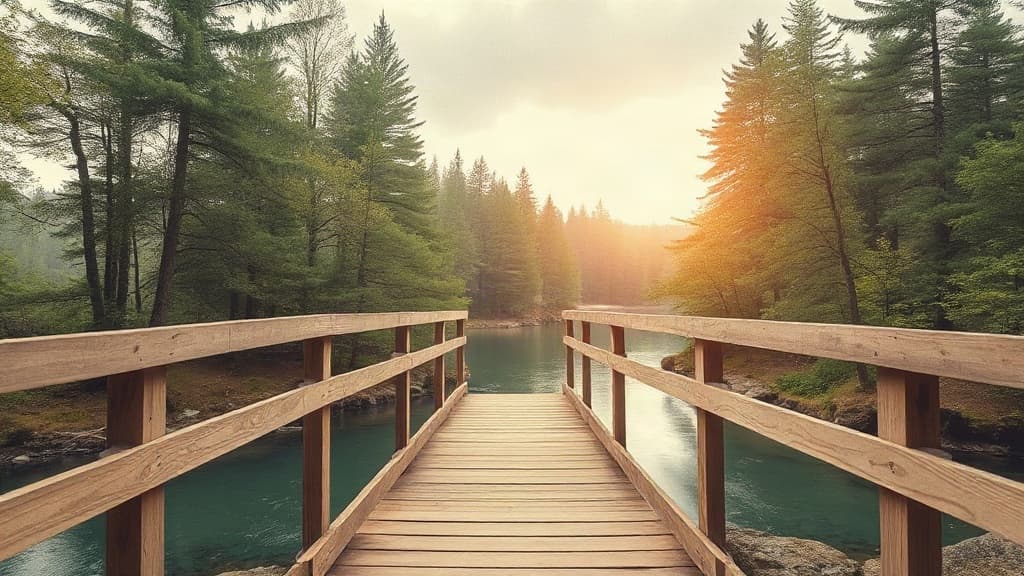
The unfamiliar path is often the one that leads you back to yourself. Not the path mapped out by other people's success stories. Yours — the one you discover by walking it.
Why Comparison Pulls Us Away From Ourselves
An ancient mechanism in a modern world
Comparing is a deeply human, ancestral reflex. Originally, it helped us adapt to the group and survive. But today, this mechanism spins its wheels in an environment it was never designed for: social media, magazines, advertising.
You're no longer comparing yourself to ten people in your neighborhood. You're comparing yourself to millions of carefully curated profiles engineered to look perfect. Your brain simply hasn't evolved to process that volume of information without taking a hit.
The collective myth of the "good life"
At Humans.team, we talk about egregores — those invisible collective energies that shape our thoughts and behaviors without us even realizing it. There's a powerful egregore around the idea of "making it in life": having a certain status, a certain home, a certain body, certain travel experiences.
That egregore isn't yours. It's a collective construct you've absorbed. And if you never question it, you spend your life chasing an image that was never meant for you.
Understanding how to find your own lifestyle without comparing yourself to others starts right here: recognizing that most of the standards you hold yourself to come from the outside, not from within.
The real cost of comparison
Constant comparison generates a deep kind of fatigue. It burns through precious mental energy that you could be investing in what actually nourishes you. It creates chronic dissatisfaction — because there will always be someone who seems "more" than you in one area or another.
And most importantly, it drowns out your own voice. The one that knows, deep down, what you actually need to feel good.
If you want to go deeper on this, this article on breaking free from other people's opinions and finally living on your own terms offers powerful tools for reclaiming your inner freedom.
Practical Keys to Finding Your Own Lifestyle
1. Separate your desires from the ones you've borrowed
Grab a piece of paper. Write down five things you "want" in your life right now. Then ask yourself this question about each one: "Do I genuinely want this, or do I want other people to see me having it?"
It's an uncomfortable question. It's also one of the most liberating ones.
Some desires will hold up under scrutiny — they come from you, they're real. Others will reveal themselves as borrowed: wishes made to please, impress, or match an image. Spotting that difference is already the beginning of finding your own path.
2. Reconnect with your real-life moments
Set aside abstract aspirations for a moment. Think about the concrete moments when you felt genuine ease, genuine satisfaction. Not pride (which often involves other people's gaze), but inner contentment.
What were they? A deep conversation? A creative project? A quiet hike? A slowly cooked meal?
These moments are valuable clues. They show you what your natural lifestyle actually looks like — the one that exists when you stop performing.
3. Practice a comparison detox
In practical terms: choose a period — a week, a weekend — during which you deliberately cut back on exposure to other people's lives. Less social media, fewer "inspiring" content feeds that, paradoxically, end up being discouraging.
This apparent emptiness creates space. And in that space, something happens: your own desires start to surface — quieter than external influences, but far more real.
This isn't avoidance at all. It's listening. And learning to do nothing without feeling guilty is part of this reconnection with yourself.
4. Define your own criteria for success
Comparison is only possible when you're using the same measuring stick as everyone else. But who decided that stick was yours?
Take the time to define, in writing, what you call a good day. A good week. A life well-lived. Not in terms of visible achievements, but in terms of how you feel, the quality of your presence, your alignment with your values.
When you have your own criteria, comparison loses its grip. You're playing a different game — your own.
5. Accept that your path is non-linear
One of comparison's biggest traps is making us believe that everyone else follows a logical, progressive, clearly visible path. That if you're not moving forward "like them," you must be falling behind.
But the path toward your own lifestyle is rarely a straight line. It involves pauses, detours, and moments of questioning. And it's precisely in those uncertain moments that the real discoveries happen.
The unfamiliar path is often the one that leads you back to yourself. Trust it.
An Immediate Practical Exercise: Something You Can Do Today
You don't need to wait until you feel "ready" to start. Here's a simple practice you can do right now, in under fifteen minutes.
The three circles exercise:
Draw three slightly overlapping circles. In the first, write down what you genuinely love doing (not for any reward, not to impress anyone). In the second, write down what you deeply need to feel good (calm, connection, creativity, movement…). In the third, write down what you naturally do well, without apparent effort.
The area where all three circles overlap? That's the seed of your lifestyle. It's not perfect, it's not complete — but it's yours.
Keep that piece of paper. Come back to it in a week. Notice what has shifted, what has become clearer. Your lifestyle isn't a fixed destination — it's an ongoing conversation with yourself.
And if you want to go further in this exploration, this article on how to build a life that truly feels like yours will walk you through the next concrete steps.
Conclusion: Happiness Is Now ◯
Knowing how to find your own lifestyle without comparing yourself to others isn't a luxury reserved for people who've "figured everything out." It's a daily practice, available to anyone, that begins with a single gesture: choosing to look at yourself rather than at everyone else.
That's not selfishness. That's clarity.
Every time you compare yourself, you spend energy measuring your life against a scale that was never meant for you. Every time you come back to yourself — to your real desires, your rhythms, your values — you build something unshakeable: an authentic life.
And an authentic life doesn't need to be validated by anyone else's approval. It justifies itself simply by the fact that it feels right — right now, in this present moment.
Happiness isn't waiting at the end of the road. It's in the way you walk. It's in the decision, made today, to live according to who you truly are.
Happiness is now ◯
What's one thing you would do if you stopped comparing yourself to others — just for today?
If this article resonated with you, Humans.team is a whole community exploring these questions alongside you — no judgment, no imposed template, just humans choosing to come back to themselves. Welcome, if it feels right.