How to Pray Without Believing in God: Praying When You Don't Believe (and Why It Works)
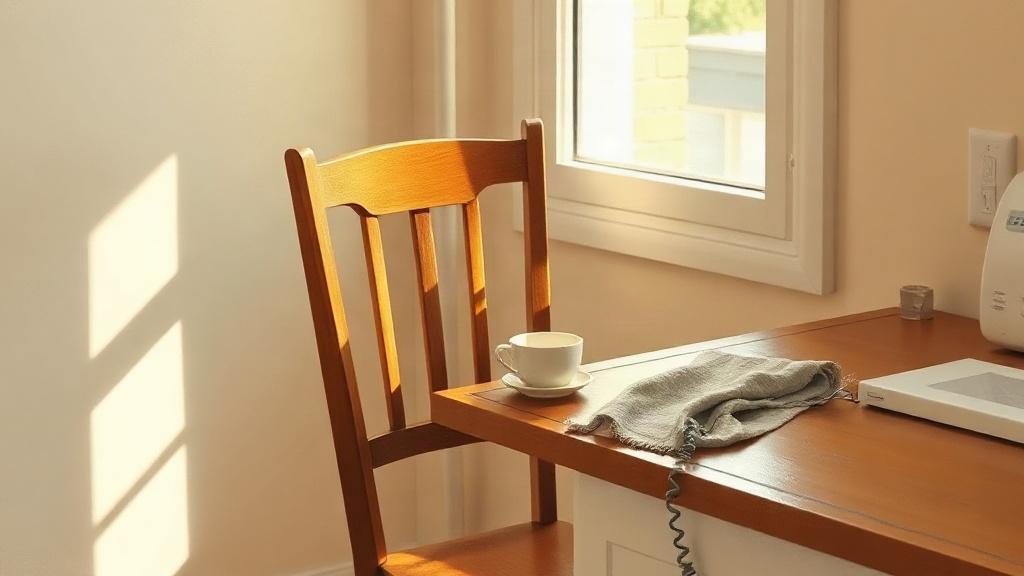
It's 11 p.m. The house is quiet. Something is weighing on your chest: a worry, a loss, an overflow you don't know where to put down. You'd like to pray. Or rather, you'd like to speak to something bigger than your exhaustion.
But you don't believe in God. Or you don't anymore. Or you're not sure. So a small voice says: "Pray? You? That would be hypocritical."
That voice is honest, but it's wrong about one thing. Many of us quietly search for how to pray without believing in god without daring to say it out loud, because we assume prayer belongs to people who have faith. Yet prayer, in its simplest form, is far older and far wider than any single religion.
In this article, we'll look at what praying can mean when there's no god to address, why the gesture continues to do us good, and above all how to practice it starting tonight, without denying anything about who you are.
Understanding the Idea: Prayer Doesn't Need a Recipient to Exist
When we talk about prayer, we almost always picture a conversation: someone speaks, someone else listens. If no one is listening, what's the point of speaking?
Let's look at the movement itself, before any belief.
To pray is to stop, turn inward, and name what is there. It's a deliberate pause in the noise. A moment when you stop producing, managing, reacting, and simply be present to what you're living.
This definition requires no dogma. It only requires honesty.
Prayer as a Posture, Not a Belief
There's a difference between believing in something and addressing something. Many non-religious people address something, without ever putting it that way:
- life itself;
- a loved one who has died;
- their own conscience, their deepest self;
- mystery, whatever is greater than them and has no name;
- humanity, everyone going through the same night they are.
None of these gestures requires you to claim that a supernatural being exists. They only ask you to open an inner door.
What the Traditions Themselves Say
Even within religions, some currents have understood that prayer goes beyond belief. In several contemplative traditions, praying is less about asking than about making yourself available. Silence is considered the purest form of prayer.
In other words: if you strip away the religious vocabulary, a universal gesture remains. Falling silent, turning toward what matters most, letting rise whatever needs to rise.
Why It Matters in Your Life: The Need That Reason Doesn't Make Disappear
You can be perfectly rational and still feel a need that nothing else fills. That's not weakness, and it's not a leftover belief you failed to get rid of. It's human nature.
We Need Rituals for Inner Transition
We spend our days in "doing" mode: answering, deciding, moving forward. Body and mind need thresholds, moments that mark the end of a sprint and the start of a breath.
Prayer without belief fills exactly that role. It becomes a threshold. A place where you set down what you're carrying, without having to solve it.
Saying Things Out Loud Changes Their Weight
A worry that loops in your head feels enormous. The moment you put it into words, even to no one, it takes shape, so it has edges, so it has a size. That simple act of naming lightens it.
To pray without believing is to give yourself permission to say: "This is what's here, in me, right now." Nothing more, and that's already a lot.
Connection Breaks the Loneliness of "Going It Alone"
A large part of our suffering comes from feeling separate: from others, from life, from ourselves. When you pray, even with no specific recipient, you reconnect. You remind your nervous system that you belong to something larger.
That's exactly what our Thought of the Day says: "Human beings are made to walk together. Not necessarily fast, but together." At its heart, praying is remembering that you don't walk alone, even when no one is visible beside you.
If this idea of connection without religion speaks to you, you'll find a natural follow-up in this guide to feeling spiritually connected without being religious.
Practical Keys to Learning How to Pray Without Believing in God
There's no magic formula here, just a few simple landmarks. Take the ones that resonate and leave the rest.
1. Choose a Recipient That Speaks to You (or None)
You don't have to name anyone. But if addressing a presence helps, the choice is entirely yours:
- "To life: thank you for what I can't see yet."
- "To you who are no longer here: this is what I'm going through."
- "To the part of me that knows: help me listen to myself."
If nothing comes, simply speak into the void, sincerely. The void isn't a problem: it's a space. What matters is the quality of your presence, not the identity of whoever hears you.
2. Start with Silence and the Body
Before you say anything, settle in. Plant your feet on the floor. Breathe slowly three times. Let your shoulders drop.
The body is the most reliable way in. A prayer that is born from a calmed body needs no belief to be true.
3. Tell the Truth, Undecorated
Drop the stock phrases. A prayer without belief gains power when it is bare:
- "I'm tired."
- "I'm afraid of what's coming."
- "I don't know what to do."
There's no need to dress it up. Sincerity replaces the formula. It's even more powerful, because it isn't trying to impress anyone.
4. Express Gratitude, Even a Tiny Bit
Gratitude may be the form of prayer most accessible to non-believers. It asks for nothing; it simply acknowledges.
Each evening, name three things, however modest: a warm cup of tea, a message you received, a moment of calm. This gently redirects your attention toward what's going well, without denying what isn't.
5. End with an Intention, Not a Request
Instead of "make everything work out," try an intention that commits you:
- "Tomorrow, I'll move forward gently."
- "I choose to stay present."
- "I let go of what I can't control."
You're not begging for outside intervention. You're aligning with what you want to embody. It's a prayer that makes you an active participant in your own life.
And if you doubt that these simple gestures really "count," know that they're part of a broader path, that of turning your everyday life into a spiritual practice, with no imposed ritual.
Immediate Practice: Your First Prayer Without Belief, in 5 Minutes
Here's a short exercise to do right now, or tonight before bed. You need nothing but yourself.
Step 1: Set the Scene (1 minute)
Sit comfortably. Turn off your phone or move it away. Breathe deeply three times, lengthening the exhale.
Step 2: Name What Is There (1 minute)
Say, in your head or in a whisper: "Right now, I feel…" Let the words come. No judgment, no correcting.
Step 3: Choose Who You're Speaking To (30 seconds)
Who or what do you want to talk to? Life, a loved one, your conscience, the silence. Or no one. You can simply say: "To whatever is listening, if anything is."
Step 4: Say Thank You for One Thing (1 minute)
Just one. It can be very small. Let the gratitude settle in your body, not only in your head.
Step 5: Form Your Intention (1 minute)
One short sentence, in the present tense, that sounds like you: "I choose to…" Breathe. Stay for a few seconds in the silence that follows.
Step 6: Come Back Gently (30 seconds)
Open your eyes, stretch, return to the room. You've just practiced how to pray without believing in god, and you haven't betrayed a single one of your convictions.
A Word on Consistency
You don't need to do it perfectly, or every day. Prayer without belief is lived like an encounter, not an obligation. Some evenings it will be two minutes of silence. Other times, a full page written in a notebook. Both count.
If you're looking for other paths along the same lines, you can explore these ways of nourishing yourself spiritually without formal practice. You may discover that you were already practicing without knowing it.
Conclusion: You Don't Have to Believe to Feel Connected
Maybe you were looking for permission. Here it is: you can pray without believing in God, and your prayer will be real, because what makes it true is your sincerity, not your creed.
To pray is to give yourself a moment of honesty with yourself. It's to remember that you're part of a living fabric, and that you don't have to carry the weight of what you're going through alone. How to pray without believing in god comes down to this: stop, be real, open your heart, and let it be.
You don't have to choose between your clear-headedness and your depth. The two can walk together. Like all of us: not necessarily fast, but together.
So here's a question for you tonight: what would you want to say, if you knew your voice could simply be set down, without judgment?
If this reflection spoke to you and you'd like to continue it with a community that is also trying to live more consciously and more connected, you're welcome at humans.team. Not to sign up to anything, just to walk beside us for a while.
Happiness is now ◯