How to Stop Feeling Exhausted After Work: Get Your Energy Back Without Waiting for the Weekend
It's 6:30 p.m. You close your laptop, or clock out, or finally drop your keys on the table by the door. And then, nothing. Just a void.
Not the pleasant tiredness of a full, satisfying day. More of a dull exhaustion that clings to your body. You have no energy left to cook, to call a friend, to be with yourself. You collapse on the couch, phone in hand, and the evening disappears.
If you're searching for how to stop feeling exhausted after work, it's because you sense that something isn't right. This kind of tiredness shouldn't be your normal.
What you're about to read isn't a list of productivity hacks. It's an invitation to look at your exhaustion differently, and to start today with simple actions that genuinely change your evenings.
Understanding Exhaustion After Work: It's Not (Just) a Lack of Sleep
Most people assume post-work fatigue can be fixed with more rest. And yet, you can sleep eight hours and still feel drained by 5 p.m. Why?
Because there are several kinds of tiredness, and we constantly mix them up.
Physical fatigue
This is the most obvious one: tense muscles, an aching back, burning eyes after eight hours in front of a screen. It's restored through movement, fresh air, and rest.
Mental fatigue
A cascade of decisions, notifications, emails, meetings: your brain has been working without a break. It's overloaded, like a phone battery at 3%.
Emotional fatigue
This is the most invisible kind. Smiling when you don't feel like it, absorbing other people's moods, holding back what you really think. Every small gap between what you feel and what you show uses up energy.
Meaning fatigue
This one is rarely named. It shows up when you spend your days doing things that don't feel like you, without knowing why you're doing them. No amount of coffee can fix it.
Understanding how to stop feeling exhausted after work starts with identifying which of these types weighs on you most. Often, it's a mix. And that's great news: each type has its own levers.
Why This Matters in Your Life: Exhaustion Steals Far More Than Your Evenings
We tend to normalize exhaustion. "That's adult life," "everyone's tired," "that's just how it is." This resignation has a hidden cost.
What exhaustion really takes from you
When you come home drained every night, you don't just lose time. You lose:
- Your relationships: you're physically present but mentally absent.
- Your desires: the projects close to your heart stay in a drawer.
- Your simple joys: cooking, walking, laughing for no reason.
- Your sense of self: you end up believing you're "a tired person."
That last one is the most dangerous. Repeated tiredness becomes an identity. You stop saying "I'm tired today" and start saying "that's just who I am."
Being tired doesn't mean you're weak
Here's what we too often forget: exhaustion is a signal, not a manufacturing defect. Your body and mind are talking to you. They're saying: "This pace, this setting, this way of living isn't nourishing you."
Listening to that message is clarity, not weakness.
If you recognize yourself in that feeling of running on empty, you might also explore how to find the energy for your dreams after a long day at work, a complementary perspective on what's still possible even when the day has been heavy.
Happiness doesn't wait for the weekend
Many people live in "survive the week" mode: hold on until Friday, recover, then start over. The result: five days out of seven are sacrificed.
What if happiness were a decision you could make right now, even on a Tuesday at 6:30 p.m.? Not by overhauling your schedule, but by changing how you inhabit your evening.
Happiness is now ◯
Practical Keys to Stop Feeling Exhausted After Work
Here are five simple, tested, accessible levers. You don't need to apply them all: choose the one that resonates most.
1. Create a transition ritual between "work" and "you"
The problem isn't only the day itself, it's that you never really leave it. Your brain keeps running in work mode on the commute, in the kitchen, in your bed.
A transition ritual sends a clear signal: "The day is over."
A few ideas:
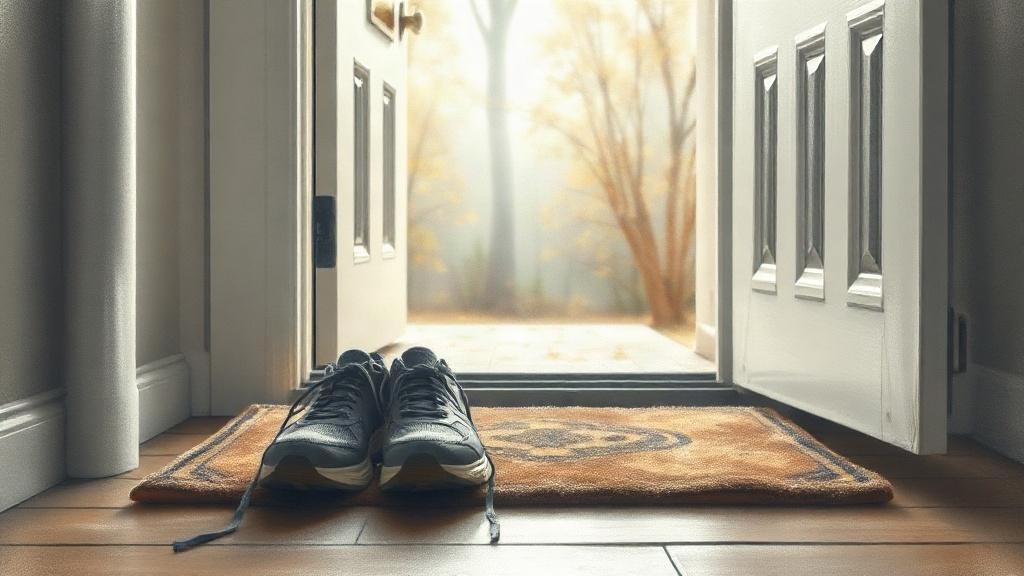
- Walk for 10 minutes without headphones before going home
- Wash your hands and face with cool water as soon as you arrive
- Change your clothes right away
- Take three deep breaths before stepping through the door
What matters isn't the gesture, it's the intention. You're telling your body: "I'm coming back to myself."
2. Feed your energy instead of draining it
Many evenings are spent "recovering" in front of a screen. But passive scrolling doesn't recharge you: it numbs you. You feel a little less bad, but not more alive.
Real recovery comes from activities that give energy rather than take it:
- Gentle movement (stretching, walking, dancing in the living room)
- Doing something with your hands (cooking, drawing, gardening)
- Talking to someone who lifts you up
- Connecting with living things: plants, sky, silence
It may sound counterintuitive: move when you're tired? Yes. Light movement restarts circulation, calms the mind, and releases feel-good hormones. It's often the first step toward how to stop feeling exhausted after work in a lasting way.
3. Release energies that aren't yours
Here's a point rarely discussed: part of your tiredness doesn't come from what you do, but from what you absorb.
A tense team atmosphere, constant urgency, fear of making mistakes, quiet competition: these collective energies (we call them egregores) settle into you without you noticing. You carry the office's anxiety as if it were your own.
A simple evening exercise:
- Close your eyes and place a hand on your heart.
- Ask yourself: "What am I carrying today that isn't mine?"
- Imagine setting these burdens down, one by one, like putting down heavy bags.
- Breathe. Tell yourself: "That's the world of work. I'm here, right now."
This awareness lightens the load. You stop confusing your inner state with the atmosphere around you. And if you also carry the weight of the people around you, learning to stop feeling responsible for other people's emotions can change the way you come home.
4. Redefine what "rest" means
We often associate rest with total inactivity. But your body and mind need different kinds of rest.
- Sensory rest: reducing screens, noise, and stimulation
- Creative rest: soaking in beauty, nature, and music
- Emotional rest: spending time with people where you don't have to play a role
- Meaning rest: reconnecting with what matters to you
Sometimes, doing nothing is exactly what you need. Some people even find that a truly conscious break makes them more effective afterward, as explained in this article on feeling more productive after a whole day of doing nothing. But "doing nothing" doesn't mean "collapsing in front of a screen": it's a chosen pause, not an endured one.
5. Listen to what your tiredness is trying to tell you
This may be the deepest key. Chronic tiredness is sometimes a message: too many "yeses" said out of fear, too many roles played, too much time spent away from what makes you feel alive.
Ask yourself this question, without judgment:
"What in my day drains me the most? And what fills me up, even just a little?"
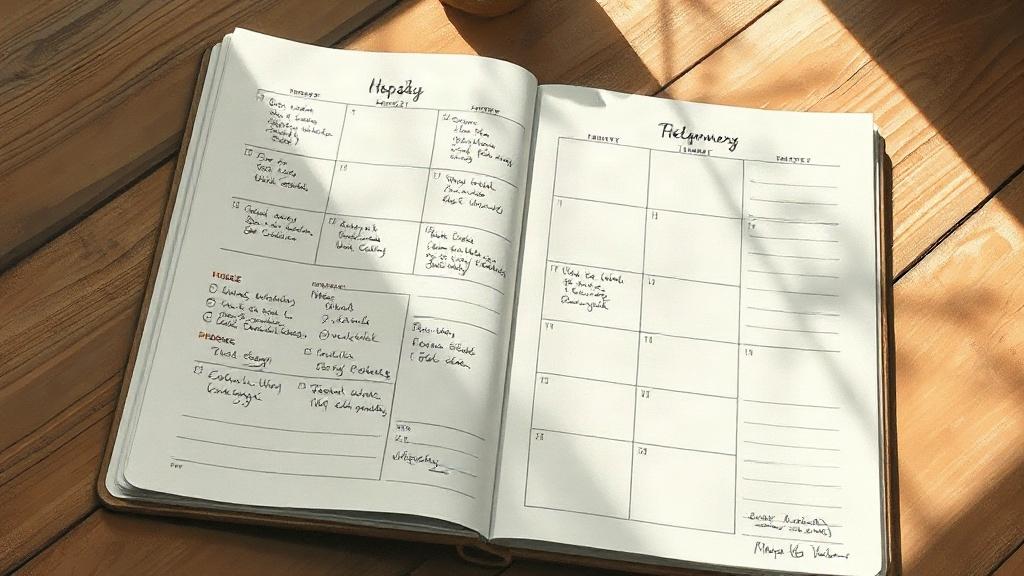
Write down your answers. You'll start to see patterns. Those are your paths to change, even tiny ones.
Putting It Into Practice: Your Evening Tonight
Everything above stays theoretical until you try it. Here's a 20-minute mini-practice to test tonight, without upending anything.
Step 1: The decompression airlock (5 minutes)
When you get home, before anything else, sit down somewhere. Put your phone out of reach. Breathe slowly, lengthening your exhale. Simply tell yourself: "The day is over."
Step 2: Gentle movement (5 minutes)
Stretch, walk around your place, open a window, put on music you love. No performance: just wake up your body.
Step 3: The gesture that feels like you (10 minutes)
Choose just one thing that truly nourishes you: mindfully making a cup of tea, writing three lines in a notebook, calling someone who makes you feel good, watching the sky through the window.
It's not much. But it's a "yes" to yourself.
And if you have no energy at all?
Then scale down even further. One conscious breath is enough to begin. One glass of water sipped slowly. One look out the window.
The point of how to stop feeling exhausted after work isn't to transform your life in a single evening. It's to plant a seed of presence. Tomorrow, it'll be a little bigger.
Keep this in mind
You don't have to be perfect or consistent. There will be evenings when you collapse on the couch, and that's perfectly fine. The goal isn't to replace one demand with another, but to move gradually closer to yourself.
Conclusion: Your Exhaustion Isn't a Life Sentence
Let's go back to the beginning. If you feel exhausted after work, it's not a character flaw or a lack of willpower. It's the result of a mix of physical, mental, and emotional fatigue, sometimes meaning fatigue, and energies you never needed to carry.
The good news: each of these fatigues can be eased. Not through a dramatic upheaval, but through small, repeated choices: a transition ritual, gentle movement, a moment of presence, an honest listening to what your body is telling you.
As today's thought reminds us: "Every beat of your heart is a small yes to life." Even in exhaustion, your heart beats. It keeps saying yes. You can answer it in return.
So, one question to let resonate:
If you could give just one thing to your evening tonight, what would do you the most good?
You don't have to wait for "someday" to feel better. You can begin now, with what you have, right where you are.
If this reflection spoke to you, you can continue the journey with us at humans.team: a space for those who choose to live more present, more free, more human. No pressure, no miracle promises, just an invitation to come back to yourself.
Happiness is now ◯