How to Stop Feeling Stuck in a Rut: Find Your Momentum When Everything Seems Frozen
You wake up. You do what you always do. You go to bed. The next day, it all starts over, exactly the same.
Nothing is really wrong, and yet something is quietly going dim. The days blur together, your enthusiasm has gone quiet, and a small voice whispers: "So this is my life?"
If you recognize yourself in these lines, know one thing right away: you're not broken, you're not failing, and it's not "too late" for anything. You're simply standing at a crossroads you haven't yet recognized as a crossroads.
In this article, we'll explore how to stop feeling stuck in a rut, with concrete keys you can apply starting today. No miracle promises. Just clarity, a few simple tools, and an invitation to move, even by a single millimeter.
Because, as we like to remind ourselves: "Doubt is part of the journey. Keep going anyway, and it will follow you less and less."
Understanding What "Being in a Rut" Really Means
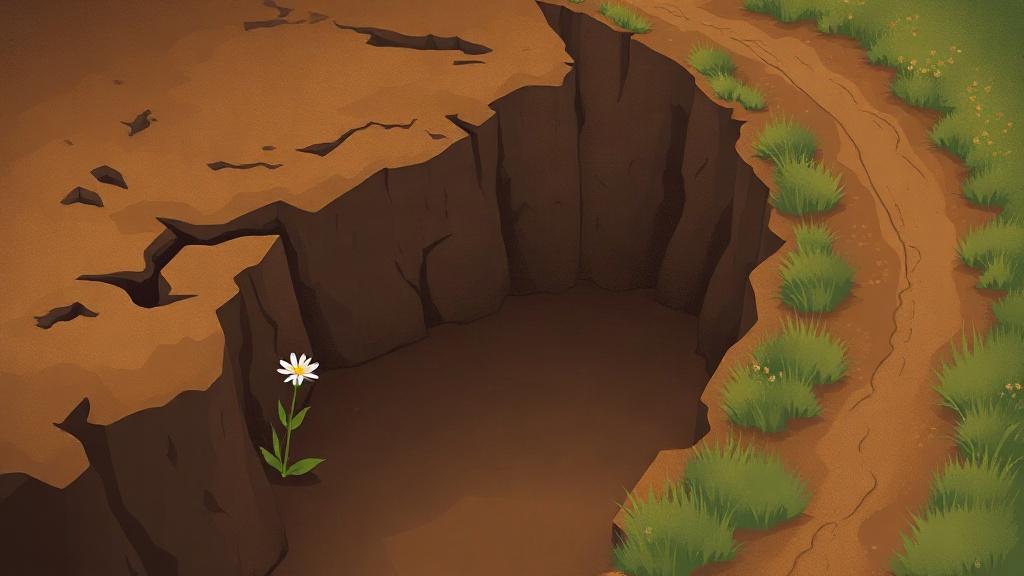
A rut is the groove worn into a path by wheels passing over it again and again. The more often you travel it, the deeper it gets, and the harder it becomes to climb out.
That's exactly what happens in our lives. Our routines, our reflexes, and our ways of thinking carve grooves. At first, they serve us: they save our energy, give us landmarks, and make us feel secure. Then one day, they turn into rails we no longer know how to leave.
It's not a character flaw
First essential point: feeling stuck is not a problem of willpower or personality. It's a human mechanism, almost a mechanical one. Our brain loves predictability. It prefers a dull but familiar routine over an uncertain freedom.
Understanding this changes everything. You stop judging yourself ("I'm useless, I'm not getting anywhere") and start observing ("I'm in a groove, how do I get out of it gently?").
Signs you're in a rut
Here are some common signals:
- The days blur together, and you struggle to remember what sets them apart.
- You keep putting off what mattered to you until "later."
- You feel a vague weariness with no clear cause.
- You compare yourself to others, who seem to be moving ahead faster.
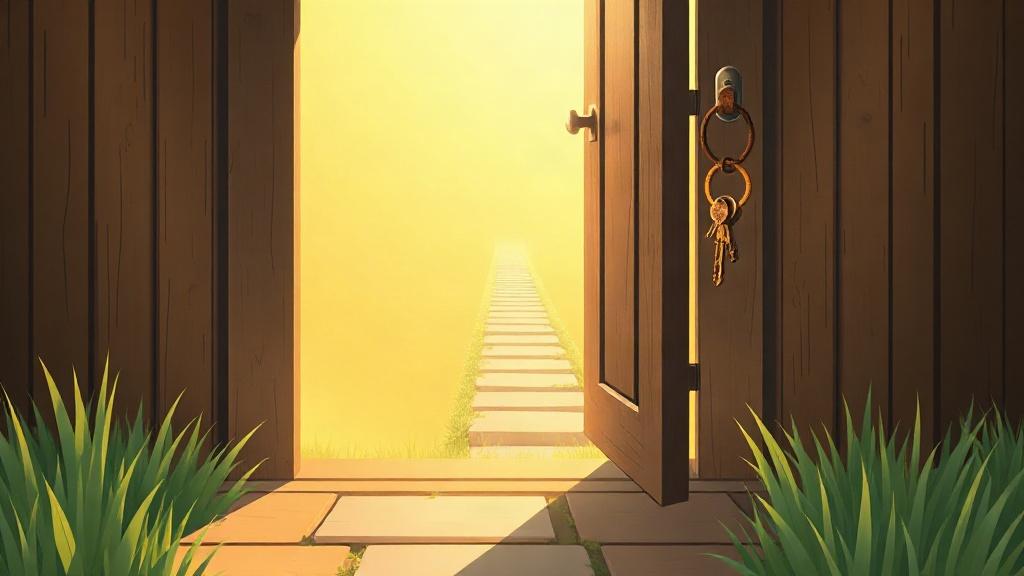
- You're waiting for some outside event to "unlock" you.
That last point is crucial, and we'll come back to it. Because learning how to stop feeling stuck in a rut often begins with a shift in how you see waiting itself.
A collective rut, too
There are also ruts that don't come from you. What Humans.team calls egregores: those collective energies, those ambient "shoulds" (succeed, produce, tick the boxes) that push us in directions we never really chose.
Part of your feeling of being stuck may come from there: you're walking a path laid out by someone else. And that, you can question.
Why This Matters in Your Life
You might think: "After all, it's just a phase, it'll pass." Sometimes that's true. But ignoring this feeling for too long comes at a cost, often an invisible one.
The rut drains your vital energy
Staying stagnant is not neutral. It takes a huge amount of energy: the energy of suppressing the urge for change, of justifying the status quo, of telling yourself "that's just how it is."
You could be using that energy to create, to love, to explore. Instead, it evaporates into a dull discomfort. Knowing how to stop feeling stuck in a rut is also about reclaiming a strength you didn't realize you were losing.
It cuts you off from who you really are
When you go around in circles, you eventually forget what makes you come alive. Your desires grow blurry. You're no longer quite sure what you love, what you want, or what feels like you.
Little by little, you live on autopilot. And living on autopilot means being absent from your own life. It's not tragic, but it's a shame, because your life is happening now, not in some hypothetical future.
It feeds the "someday" belief
This is probably the most insidious trap. In the rut, you tell yourself: "Someday, when I have more time… when things calm down… when I'm ready…"
That "someday" is a comfortable illusion. It postpones the decision to live fully indefinitely. But happiness isn't a destination you reach after solving all your problems: it's a decision made in the present moment.
It's a theme close to the one we explore in this article on feeling "behind" in your life: the fear of having fallen behind is often the secret fuel of standing still.
The upside: this feeling is a signal
Here's the good news. Feeling stuck is not a punishment. It's information. A part of you is saying: "There's more for me." It doesn't shout, it whispers. And that whisper is precious: it proves your desire for life is still very much alive.
Practical Keys to Get Out of the Rut
Let's get to the heart of it. Here are five simple levers for understanding how to stop feeling stuck in a rut, with no brutal revolution or dramatic upheaval.
1. Start by naming what is, without judging yourself
You can't leave a place you refuse to acknowledge. Take five minutes, with a notebook, and simply write:
- Where do I feel frozen?
- Since when?
- What is it costing me?
No analysis, no judgment. Just an honest observation. This simple clarity already dissolves part of the fog. To name something is to take the reins back.
2. Introduce a micro-break into your routine
The brain breaks out of autopilot when it's offered something new, however tiny. You don't need to change everything: you just need to snap one thread.
A few ideas:
- Take a different route to work or to the shops.
- Eat a meal somewhere unusual.
- Rearrange a corner of your room.
- Listen to a style of music you never listen to.
These small detours awaken curiosity, and curiosity is the natural antidote to stagnation. One millimeter to the side is enough to leave the groove.
3. Let go of what isn't yours
Many ruts are born from carrying too much: other people's expectations, responsibilities you've assigned yourself, roles you play out of habit.
If you're carrying the weight of the emotions or problems of the people around you, it's no wonder you have no energy left to move forward. You can explore this in this article on the urge to fix everyone: it shows how to put down what doesn't belong to you and reclaim some space.
Lightening your load makes movement possible.
4. Narrow your choices to rediscover your momentum
Paradoxically, being stuck sometimes comes from having too many options. Faced with a thousand possibilities, we stop moving: the fear of choosing wrong paralyzes us.
Try this: instead of looking for "the" right direction, simply pick one small action and do it. Movement creates clarity, rarely the other way around. You don't need to see the whole road to take the next step.
5. Reconnect with a desire, even a tiny one
Ask yourself, without censoring the answer: "What would I enjoy, right here, right now?" Not in ten years. Now.
Maybe a walk, a call to a friend, a drawing, a homemade soup. A desire doesn't have to be grand to be right. By following it, you reconnect with your inner compass, the one the rut had put to sleep.
Putting It Into Practice: Your 7-Day Plan
Enough theory. Here's a mini-journey to try starting today. It takes no time and no money, just a little attention.
Day 1: The check-in. Write three honest sentences about what's weighing on you. Nothing more.
Day 2: The micro-break. Change one tiny habit in your day. Notice how it feels.
Day 3: The desire. Jot down five things that would bring you pleasure, even small ones. Pick one and do it.
Day 4: The lightening. Identify one obligation you could put down, delegate, or turn down. Just one sincere "no."
Day 5: The movement. Do something with your body: walk, stretch, dance around your living room. The body unlocks what the mind doesn't dare to.
Day 6: The connection. Talk to someone, for real, authentically. No mask, no performance. One genuine conversation is worth a thousand good resolutions.
Day 7: The anchoring. Reread your notes. What did you notice? What small thing would you like to keep? Keep it.
An essential reminder
This plan is not a performance test. If you skip a day, nothing is lost. The point isn't to "succeed" at getting out of the rut, but to start moving again, kindly.
And if doubt creeps in along the way ("what's the point?", "it won't change anything"), remember today's thought: doubt is part of the journey. It doesn't disappear before you move forward. It fades because you move forward.
Conclusion: The Rut Is Not Your Destiny
You're not condemned to keep retracing the same groove forever. Every small step you take to the side traces a new path, and the more you walk it, the more natural it becomes.
Learning how to stop feeling stuck in a rut doesn't mean becoming someone else or overhauling everything. It means remembering that you have the right to choose, here and now, a different way of inhabiting your day. Not tomorrow. Not when everything is ready. Now.
So, to close this article, here's a question to carry with you:
What is the smallest step you could take today, just to prove to yourself that you can still move?
Not the biggest. The smallest. The one that almost makes you smile because it's so simple.
If this reflection resonates with you, you can continue the journey at humans.team, a space designed to help you live more consciously, more freely, and more aligned, with no pressure and no magic promises, just authenticity and kindness.
Happiness is now ◯