How to Stop Letting Your To-Do List Define Your Worth ◯
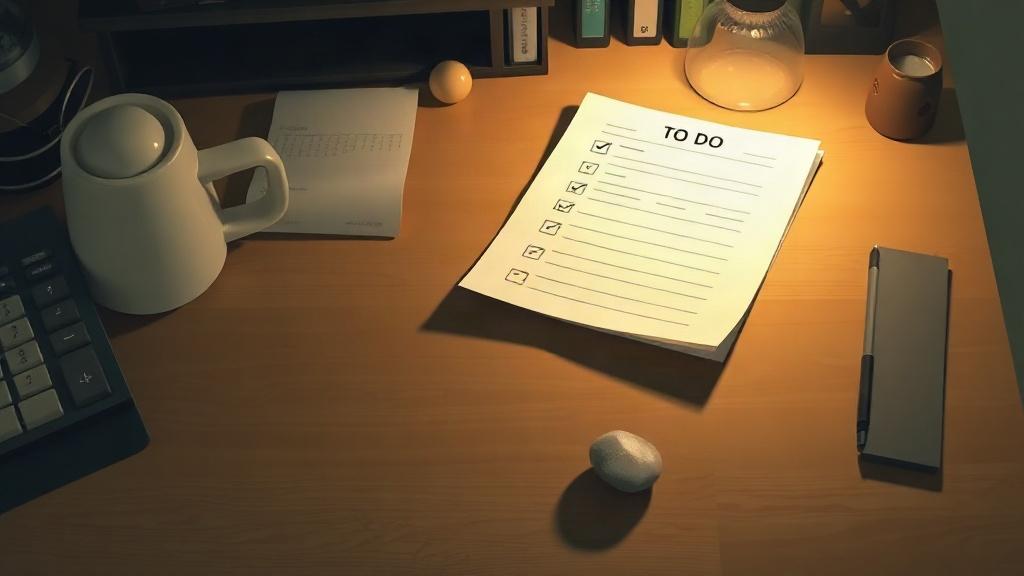
It's 10 p.m. You're sitting on the couch, phone in hand, tallying up your day. Eight tasks on your list. Five checked off, three left. And yet a small voice whispers: "You could have done better."
But you handled the unexpected, answered the messages, supported someone who needed it, gulped down cold coffee on the run. None of that was on the list, though, so none of it really counts.
If this scene feels familiar, you're not alone. Millions of people measure their worth by the length of their checked boxes without even realizing it. And if you want to understand how to stop letting your to-do list define your worth, you're in the right place.
One thing before we begin: Humans.team's thought of the day says, "Look at how far you've come this year. Every day was an act of quiet courage." None of those acts were on a list. None of them got checked off. And yet they kept you standing.
This article will help you rediscover that truth: you are not what you accomplish. You are already someone, long before the first task of the morning.
Understanding the Concept: When the List Becomes a Mirror
The to-do list: a tool turned judge
At its origin, a to-do list is a neutral tool. It frees up your memory, organizes your energy, helps you see clearly. Nothing wrong with that.
The problem begins when the list changes roles. Without you noticing, it goes from servant to judge. It no longer says "here's what you want to do," it says "here's what you have to do to earn your place."
Every unchecked box becomes a small verdict against you. Every checked box, a fleeting relief, quickly replaced by the next one.
Where does this reflex come from?
This "productivity = worth" equation didn't start with you. It comes from far back: from school grading your work, from families where love seemed conditional on results, from a culture that applauds the person who "always does more."
At Humans.team, we call this an egregore: a collective energy that settles into our minds and shapes us without our ever having chosen it. The egregore of performance whispers: "You're worth what you produce."
The good news? An inherited belief is not a truth. And what we've learned, we can unlearn.
The difference between doing and being
Here is the heart of the matter. Doing is what you accomplish: tasks, projects, results. Being is who you are: your presence, your sensitivity, the way you love, your capacity to feel.
When your worth lives in doing, it becomes fragile. It rises and falls with your energy, your health, your circumstances. When it lives in being, it becomes stable. It no longer depends on how your day went.
Why This Matters in Your Life
The hidden cost of conditional worth
When you tie your worth to your list, you live with constant background pressure. Even when everything is going well, part of you stays on alert: "What if I can't pull it off? What if I let someone down?"
That tension has a price. It eats away at your sleep, undermines your presence with the people you love, and turns moments of rest into guilt. You're there physically, but your mind is chasing the next box.
The finish-line trap
There's also a subtler trap: the list never ends. No sooner is one task checked off than two more appear. If your happiness depends on the day everything is done, that day will never come.
This is the exact opposite of what we believe: happiness isn't a future reward, it's a decision you make right now. You don't need to finish anything to earn the right to be at peace.
What you lose along the way
What the list doesn't measure is often what matters most: the listening you offered a friend, the smile you shared, the patience with a child, the tenderness toward yourself.
When we only value what can be checked off, we become blind to everything that makes a life rich. And we end up feeling empty, even after a "successful" day.
This mechanism closely resembles the way the past decides for you: if this topic resonates, learning to stop letting your past define what you deserve is a valuable companion on the road. In both cases, an old story is judging your present worth.
Practical Keys to Setting Yourself Free
Here are five simple keys you can apply today. No radical overhaul: just small shifts in awareness that, repeated, change everything.
1. Separate the person from the performance
Practice making this distinction whenever your inner voice turns judge. When you think "I'm useless, I didn't finish anything," gently correct it: "I didn't finish some tasks today. That says nothing about my worth."
This isn't denial. It's precision. You're observing a fact (unfinished tasks) without drawing a verdict about your identity.
2. Create a "being list"
Alongside your doing list, keep a list of what you were today. Not what you produced, but how you lived.
For example: I was patient with my coworker. I was present at dinner. I was honest about a boundary. I was gentle with myself when I got tired.
This list makes visible the quiet courage the thought of the day talks about. These acts appear in no calendar, but they build the person you're becoming.
3. Redefine what "finished" means
A full day isn't a day when everything is checked off. It's a day when you did what truly mattered, with the best of yourself in that moment.
Each morning, choose one to three real priorities, and accept that the rest is a bonus. This simple rule lightens the pressure immediately. If your productivity is often held hostage by your inner state, taking back the reins when your emotions drive your productivity will give you some complementary guideposts.
4. Learn to congratulate yourself unconditionally
Many of us only say "well done" after a spectacular success. The result: we spend our lives waiting for a validation that never comes.
Try the opposite. Acknowledge the effort, not just the outcome. "I tried despite being exhausted. Thank you, me." This gratitude toward yourself nourishes an inner worth that no longer depends on the list.
5. Allow yourself deliberate "empty boxes"
Plan a moment each day with no goal: ten minutes of silence, a walk with no destination, a coffee without your phone. This isn't wasted time, it's time that's inhabited.
These pockets of emptiness teach you something essential: you exist even when you're doing nothing. And that's exactly what your nervous system needs to understand in order to release the pressure.
Putting It Into Practice Right Now
Enough theory. Here's a ten-minute mini-protocol to try tonight, without buying anything or changing everything.
Step 1: The brain dump (2 minutes)
Take today's list. Look at it without judging it. Breathe deeply three times. Simply tell yourself: "This list is a tool. It is not me."
Step 2: The honest sort (3 minutes)
For each unfinished task, ask yourself: "Is this truly essential, or is it the egregore of performance talking?"
Cross off what makes no sense. Postpone what can wait. Keep only what truly matters to you.
Step 3: The being list (3 minutes)
Write down three things you were today. Look for the quiet courage: a difficult conversation, a moment when you held your ground, a kindness you offered. Read them aloud if you can.
Step 4: The anchoring phrase (2 minutes)
Finish by placing your hand on your chest and telling yourself: "My worth isn't waiting to be earned. It's here, right now."
Do this for seven days. You may not notice a dramatic upheaval, but something will gently shift: the judge's voice will grow quieter, and the inner friend's voice more audible.
If you catch yourself still wanting to carry everyone else's burdens on top of checking off every box, take a look at letting go of the need to fix everyone. It's often the same pattern replaying in a different costume.
And for those who feel their life no longer belongs to them, finding your way back to a sense of belonging to yourself is a natural continuation of this path.
Conclusion: You Were Already Enough
Let's return to where we started. That person on the couch at 10 p.m., counting unchecked boxes. They deserve to hear one thing:
You made it through this year. Every single day. Even the days you checked nothing off. Even the days you simply held on. That quiet courage will never appear on a list, and yet it's what makes you precious.
Understanding how to stop letting your to-do list define your worth doesn't mean giving up ambition or organization. It means putting things back in their rightful place: the list in service of your life, not your life in service of the list.
You don't have to become someone else. You simply have to remember who you are, beneath the tasks and the expectations.
So here's a question to let sink in: if you had nothing left to prove today, how would you choose to live this day?
If this reflection speaks to you, you can continue the journey at humans.team, a space designed for those who choose to live consciously, without pressure or miracle promises. Take what serves you, leave the rest.
Happiness is now ◯