Fear of Empty Space: What If the Void Were Your Greatest Freedom?
You know this moment. A free hour suddenly appears in your calendar. No meeting, no urgent task, no demands. And instead of breathing easy, something tightens in your chest.
Discomfort. A mild panic. The immediate urge to fill the space.
You grab your phone. You open an app. You find yourself something to do. Because empty space is scary. Because silence feels like an accusation.
What if this reaction — as human as it is — were precisely what keeps you from yourself? This article is an invitation to understand how to transform your fear of empty space into a space of freedom. Not in theory. Concretely, starting today.
Understanding the Fear of Empty Space: What's Really Behind It
The fear of empty space isn't a weakness. It's a conditioned response, forged by years of repeated messages: be productive, be useful, stay busy. In modern society, emptiness is often seen as failure. Someone who "has nothing to do" is suspect.
This conditioning runs deep. It settled in so early that you no longer question it. It's part of what we at Humans.team call an egregore — a collective energy that influences your behavior without you being fully aware of it.
The problem is that running from emptiness means running from yourself.
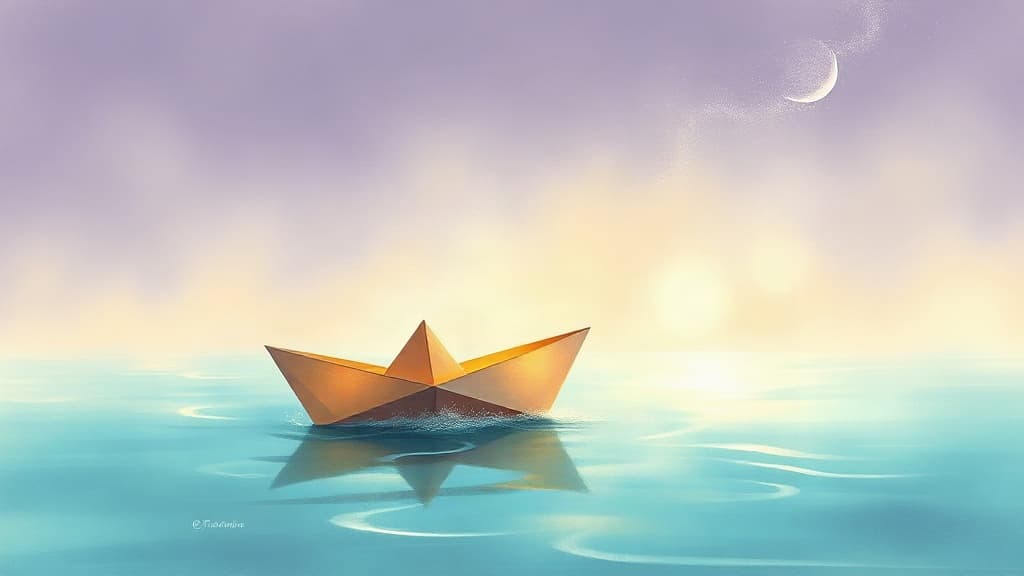
Because emptiness isn't absence. It's the space before something. It's the silence between two notes that gives music its beauty. It's the July sky between two clouds — a sky that, as the thought of the day reminds us, will never repeat itself exactly this way.
Understanding how to transform your fear of empty space into a space of freedom starts here: by recognizing that what you're running from might be an encounter with yourself.
Why This Matters in Your Life — Right Now
You might think: this is all very philosophical, but my life is concrete. So let's get concrete.
How many decisions have you made in haste, just to avoid the discomfort of uncertainty? How many relationships have you held onto out of fear of the emptiness they'd leave behind? How many projects have you launched just to avoid stopping and asking yourself what you actually wanted?
The fear of empty space has very real consequences. It pushes you toward hyperactivity, paradoxical procrastination (busy but not moving forward), and dependence on external stimulation. It keeps you from your deepest desires because it never gives you time to hear them.
If you've ever felt that strange guilt when you allow yourself to relax, you know exactly what I'm talking about. That unease isn't a signal that you're doing something wrong. It's a sign that you're getting close to something important.
Learning to inhabit emptiness means taking back the wheel of your life. It means choosing where your actions come from — fear or clarity.
Practical Keys to Transforming Your Fear of Empty Space Into Freedom
1. Name What's Actually Happening
The first key is awareness. When the discomfort of emptiness arrives, instead of immediately fleeing it, ask yourself a simple question: what exactly am I feeling, right here, right now?
Not "why am I feeling this" — that comes later. Just name it. I feel restless. I feel bored. I feel something that resembles fear.
Naming is already a way of not being completely overwhelmed. It's observing rather than suffering.
This practice, simple as it sounds, is revolutionary. Because it creates a micro-gap between you and your automatic reaction. And in that micro-gap, there's space. And in that space, there's freedom.
2. Understand What the Emptiness Is Actually Trying to Tell You
The void isn't empty. It's full of messages that daily noise drowns out.
When you truly stop, things surface. Sometimes a fatigue you hadn't noticed. Sometimes a forgotten longing. Sometimes a sadness you'd been carrying without knowing it. Sometimes — and this is where it gets beautiful — a clarity about what you actually want.
These surfacing feelings can be frightening. That's normal. They mean you're getting closer to yourself.
The practice: when you find yourself in a moment of emptiness, instead of filling it, simply ask yourself: if I weren't afraid to hear the answer, what would this space be trying to tell me?
3. Reclaim Boredom as a Creative Tool
Boredom has a bad reputation. And yet neuroscience confirms it: it's in states of boredom and daydreaming that the brain activates its default mode network — the network responsible for creativity, problem-solving, and identity formation.
In other words: when you're bored, your brain is working. Differently. But often more deeply.
The greatest ideas, the wisest decisions, the insights that change a life — they don't come from frenzy. They come in the bath, on a walk, in that moment between two thoughts.
Learning how to transform your fear of empty space into a space of freedom means reclaiming boredom. Restoring its dignity. Seeing it as fuel, not as a problem.
4. Tell the Difference Between Anxious Emptiness and Fertile Emptiness
There are two kinds of empty space. The first is anxious: you stop and worry floods in, thoughts race, the mind scrambles for something to grip. The second is fertile: you stop and you open up, something inside you breathes.
The good news: you can learn to move from the first to the second.
How? Through conscious breathing. Through body awareness. Through attention to sensations rather than thoughts. These aren't mystical techniques — they're simple, effective tools available to everyone. If you want to go deeper on this, the 8 techniques for achieving emotional freedom can guide you along the way.
5. Unlearn Permanent Productivity
This might be the deepest key. And the most counter-cultural.
Our world values doing over being. Being busy has become a sign of worth. "I'm swamped" is almost a badge of honor. In this context, stopping is an act of resistance.
But it's also an act of clarity. Because constant activity without space for reflection inevitably leads to burnout, loss of meaning, and action disconnected from what actually matters.
At Humans.team, we believe that AI can free humans from "doing" so they can focus on "being." But even without AI, you can start right now. By choosing, every day, a moment of non-doing. Not meditation if that's not your thing. Just... a space. Empty. Intentional.
Immediate Practical Application: The Conscious Void Protocol
Here's something you can do today. Right now, even.
Step 1 — Create 10 minutes of intentional emptiness. No phone. No music. No task. Just you, in a space, sitting or standing.
Step 2 — Observe the discomfort without fleeing it. It will probably show up. Let it be there. Name it. I feel restless. I feel the urge to move, to do something.
Step 3 — Ask an open question to this space. What do I actually want to experience? What's missing for me right now? What do I need that I'm not giving myself?
Step 4 — Listen without judgment. What comes up doesn't need to be immediately actionable. It can just be there.
Step 5 — Write down one sentence. Just one. What surfaced, in a few words.
This protocol, practiced regularly, transforms your relationship with emptiness. It's not advanced meditation. It's simply looking up — like that July sky you'll never see exactly this way again.
The fear of judgment can also show up in these moments of stillness — the fear of what others would think seeing you "do nothing." If that resonates with you, you'll find valuable insights in this article on the fear of others' judgment.
And if anxiety about the future makes any moment of pause feel impossible, know that living fully even when you're afraid of the future is not only possible — it's exactly what this empty space can teach you to do.
Conclusion: The Empty Space Is Already There, Waiting for You
Transforming your fear of empty space into a space of freedom isn't a journey of a few weeks. It's a practice. A relearning. A decision that renews itself.
But it starts now. In this moment. With what you have.
The July sky will never repeat itself exactly this way. And neither will you. The person you are today, with everything you carry, everything you're searching for — that person deserves space to simply exist. Not just to produce, perform, and respond.
Just to exist.
The freedom you're looking for isn't on the other side of a completed to-do list. It's in the space between two breaths. In the moment when you choose to look up instead of staring at your screen.
The void is not your enemy. It's the door.
A question for you: The next time an empty space appears in your day, what will your first reaction be? What if, just this once, you chose to stay in it a little longer?
If this article spoke to you, the Humans.team movement explores every day how to live more freely, more consciously, more humanly. No miracle recipes. Just perspectives that elevate.
Join the conversation at humans.team — and remember:
Happiness is now ◯