How to Feel Genuinely Rested When Sleep Is Not Enough: What Your Body Is Trying to Tell You
It's 7:23 AM. The alarm just went off.
You slept seven hours. Maybe eight. You did everything right. And yet — that feeling. That heaviness. That kind of fog clinging to you like the night never happened.
You lie there for a few seconds, searching the quiet for an energy that just won't come. And somewhere in the back of your mind, a question surfaces, almost embarrassing: Why am I still tired?
We've all been there. This isn't about willpower. It's not a character flaw. It's a sign that something deeper than sleep hours is asking to be heard.
Because the real question isn't how many hours you slept. The real question is: what do we actually need to feel genuinely rested?
And the answer isn't hiding in a premium mattress.
What Changes When You Understand the Difference Between Sleeping and Resting
There's a fundamental confusion many of us live with: we believe rest is an automatic byproduct of sleep. That if we sleep enough, we'll be rested. That the body handles everything on its own, in the dark.
But the body isn't a device you plug in to recharge.
Sleep repairs the physical — cells, muscles, memory. It's precious, essential. But there are other layers of exhaustion that eight hours in bed simply can't reach.
There's emotional fatigue: the kind that comes from carrying too much, managing too much, smiling when you were on the verge of breaking.
There's mental fatigue: endless to-do lists, screens, constant decision-making, the relentless noise of information overload.
There's identity fatigue: the subtlest and most draining of all — spending your days not quite being yourself.
Understanding how to feel genuinely rested when sleep is not enough starts with accepting that exhaustion has multiple layers. And that some of them can't be treated with melatonin.
Lesson 1: Silence Isn't Emptiness — It's Nourishment
"Let silence welcome you. It has so much to whisper."
We run from silence. The moment we wake up, we reach for our phones. We put on music while doing the dishes. We listen to podcasts on the commute. We fill every gap with noise, content, stimulation.
That's not curiosity. It's usually avoidance.
Silence asks nothing of you. It simply offers space. Space where you can finally hear what's happening inside — the tension, the needs, the intuitions that ambient noise methodically smothers.
Five minutes of real silence — not a guided meditation, not soft background music, just silence — can do what eight hours of restless sleep couldn't: shift the nervous system from alarm mode back to receiving mode.
This isn't spirituality. It's physiology.
Silence lowers cortisol. It allows the parasympathetic nervous system to take over. It lets the body understand there's no threat.
And when the body understands it's safe, it can finally let go. Really let go.
Lesson 2: Screen Exhaustion Is Real — And Sleep Won't Fix It
We've all felt it after a day of back-to-back video calls: drained, hollowed out, like you ran an emotional marathon without leaving the couch. If you want to understand why, this article on exhaustion after virtual meetings breaks down the deeper mechanisms at play.
This kind of fatigue is unique. On a video call, the brain works two to three times harder than in an in-person conversation. It has to reconstruct social cues, compensate for the absence of body language, and manage its own reflection in real time.
One night of sleep usually isn't enough to erase that.
What you need after a day of digital saturation is intentional disconnection before bed. Not an hour of TV to "unwind" — that's still stimulation. Something that brings you back into your body: a walk, a long shower, some gentle stretching, a meal shared without phones.
Knowing how to feel genuinely rested when sleep is not enough often comes down to creating a conscious transition between the digital world and the world of rest. Sleep can't erase what you haven't processed before lying down.
If thoughts keep spinning the moment your head hits the pillow, these 8 secrets for stopping rumination before bed can help you build that transition more gently.
Lesson 3: Your Body Needs to Be Inhabited, Not Just Carried Around
Here's something that doesn't get said enough: you can spend an entire day inside your body without ever truly being in it.
You walk while thinking about something else. You eat while scrolling. You breathe on autopilot — shallow, choppy, mechanical. You live in your head, and your body just waits.
This subtle dissociation is exhausting. Not because it takes effort, but because it cuts off the natural flow of energy. The body becomes something you haul around rather than a home you actually live in.
Reconnecting with your inner home — relearning how to actually inhabit your own body — is one of the deepest forms of rest that exists.
How? Through simple, intentional gestures. Pressing both feet flat on the floor and feeling the contact. Taking three slow breaths before responding to a message. Eating a meal while actually pausing to taste it.
These aren't esoteric rituals. They're reminders that you're here. That your body is here. And that presence, too, is nourishing.
Lesson 4: Forced Positivity Drains You More Than It Restores You
There's a form of exhaustion we rarely talk about: the kind generated by the obligation to "be fine."
You wake up tired, and immediately tell yourself you have no right to be. You slept, didn't you? You have a good life. So you force the smile. You motivate yourself with affirmations. You tell yourself it's a mindset issue.
And that constant pressure to stay positive — that resistance to what you're actually feeling — is exhausting in itself.
Figuring out how to feel genuinely rested when sleep is not enough sometimes simply means stopping the fight against fatigue. Acknowledging it. Saying: "I hear you. What are you trying to tell me?"
Fatigue isn't the enemy. It's a messenger. It points to an imbalance. A boundary that's been crossed. A need that hasn't been met.
Feeling truly good in your body, without toxic positivity — that's exactly it: welcoming what is, without performance, without judgment. And paradoxically, that's often the moment energy starts to return.
Making It Real: How to Apply This Starting Today
You don't need a ten-day retreat. You don't need to overhaul your entire life at once.
How to feel genuinely rested when sleep is not enough starts with micro-decisions, right now.
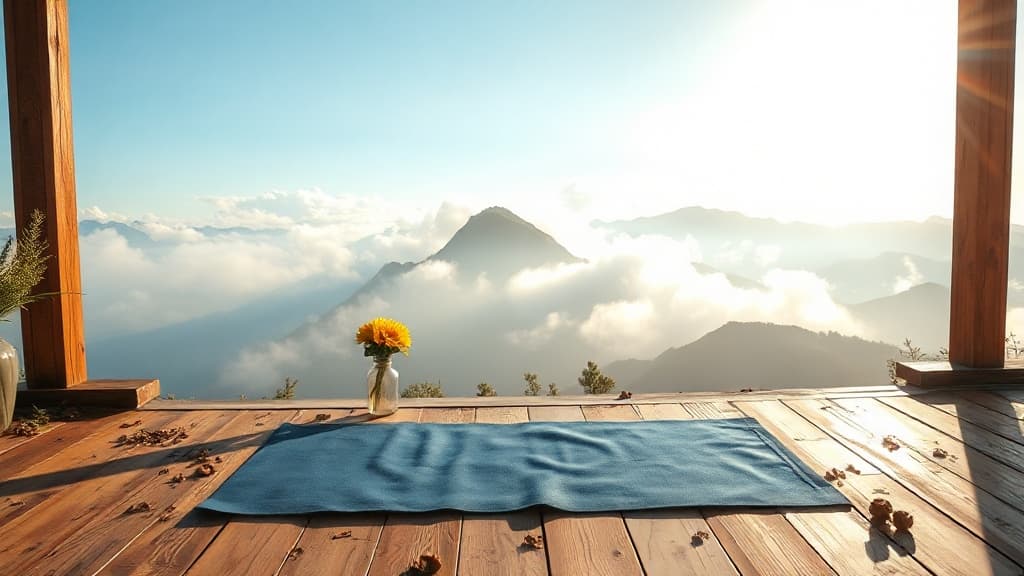
In the morning: before reaching for your phone, give silence two minutes. Just two. Feel your body. Notice your breath. Let your mind settle before you ask anything of it.
During the day: notice the moments when you're running on autopilot, and come back into your body. One gesture is enough — both feet on the floor, three breaths, a glass of water drunk slowly.
In the evening: create a boundary between the digital world and sleep. Not one more hour of content — one fewer hour of stimulation. Your body can't rest if it doesn't understand the day is over.
At a deeper level: ask yourself honestly what kind of fatigue you're carrying. Is it physical? Emotional? Mental? Identity-based? Because each type of fatigue has its own remedy. And treating the symptoms while missing the root cause means solving the wrong problem.
If you want to go deeper into understanding what your body actually needs to feel alive, this article on the deeper reasons we feel more alive in summer offers real insight into what truly fuels our energy — and how to cultivate it year-round.
Back to 7:23 AM — But Different
The alarm goes off.
This time, you stay in bed not out of heaviness, but by choice. Two minutes. Silence. Breath. Your body remembering itself.
No phone. No immediate mental to-do list. Just presence with what is, here, now.
This isn't magic. It's a decision. Small, concrete, repeatable.
How to feel genuinely rested when sleep is not enough isn't a secret locked inside an app or a supplement. It's a practice of presence. A way of listening to what your body, your heart, and your mind are asking for — separately, honestly, without forcing anything.
Deep rest doesn't come from unconsciousness. It comes from awareness.
And that starts now.
If this article resonated with you, you can explore more concrete ways to feel genuinely well — in your body, in your life, in your relationship with yourself — throughout the Humans.team blog. No miracle formulas. Just real insights, for real human beings.
Happiness is now ◯