Why Do I Feel Lonely at Family Gatherings? Understanding the Paradox and Finding Your Place Again
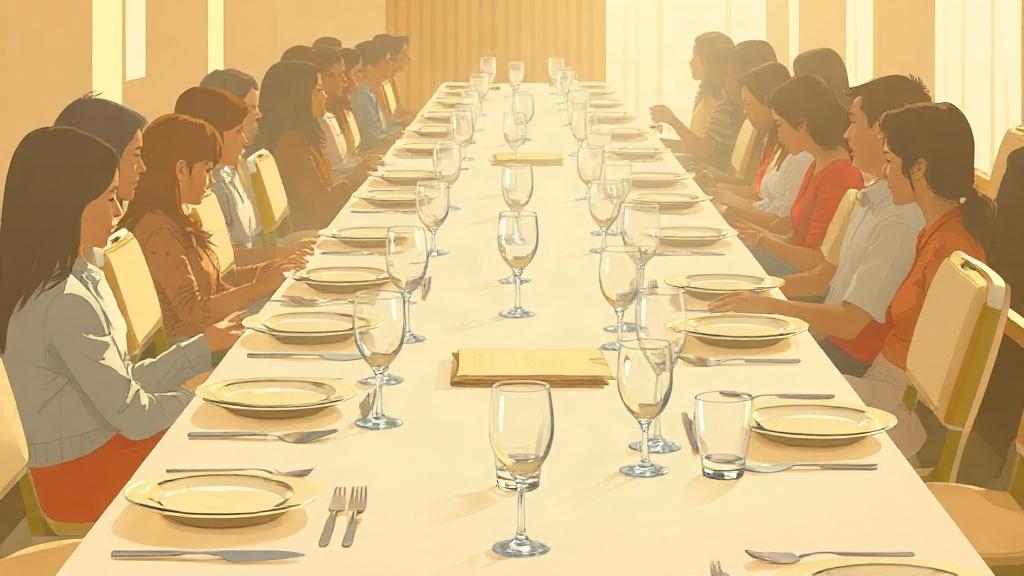
You arrive at your parents' house, or your aunt's, or that big home where everyone gathers. There's noise, laughter, plates being passed around, hugs at the door. The people around you have known you your whole life.
And yet, in the middle of that full table, a small voice whispers: "I'm alone here."
If you recognize yourself in this scene, know this first: you're not strange, you're not ungrateful, and you're not the only one. The question "why do i feel lonely at family gatherings" is asked by thousands of people every year, often in silence, because it feels almost taboo. How can you feel alone when you're surrounded by the people who, in theory, love you most?
This article will give you honest answers and practical keys. Not to tell you it's all your fault, or your family's, but to help you understand what's really going on, and to reclaim your place, starting right now.
Understanding Why You Feel Alone Around Family
Loneliness Isn't the Absence of People
First key: loneliness has nothing to do with how many people are around you. It comes from the gap between the connection you hope for and the connection you actually feel.
You can be alone in a room of thirty people. And you can feel deeply connected to someone through a single glance.
So when you ask yourself why do i feel lonely at family gatherings, the real question is more like: "What's missing in the quality of these exchanges?"
This is exactly the invisible wall described in this article about feeling lonely in a crowd: you're physically present, but something deeper isn't getting through.
Fixed Roles: The Gentle Prison of Family
A family is a system. And in every system, each person is handed a role, often very early:
- The serious one, the one who holds it all together
- The funny one, the one who lightens the mood
- The rebel, the one who stirs things up
- The quiet one, the one who gets overlooked
- The strong one, the one who never complains
The problem? These roles were handed out when you were 8, 12, or 15. You've grown up, you've changed, you've been through hard times and made discoveries. But in your family, people still see you through the old label.
The result: you find yourself playing a character who no longer resembles you. And it's precisely this mismatch that creates the loneliness. No one meets the real you, either because you're not showing up as yourself, or because you're not being given the room to.
Family Egregores: The Collective Energy That Shapes Us
At Humans.team, we often talk about egregores: collective energies made of beliefs, unspoken rules, and habits that shape a group without anyone consciously choosing them.
Every family has its own:
- "In our family, we don't talk about feelings."
- "You have to succeed, or you let everyone down."
- "We keep up appearances."
- "We never question our elders."
These invisible rules dictate what can be said, shown, and felt. When you walk into the family home, you also walk into this collective field. And if your inner truth doesn't fit the frame, you feel out of step, and so you feel alone.
The good news: an egregore is not a life sentence. You can become aware of it, and that alone is the beginning of freeing yourself from it.
Why This Matters in Your Life
Loneliness Within Family Weighs Heavier
There's a particular kind of pain in feeling alone among your own people. Elsewhere, you can tell yourself: "These people don't know me, so it makes sense." With family, the inner message is crueler: "They've known me forever… and no one really sees me."
This wound touches something fundamental: our need to belong. We are relational beings. Being seen, heard, and welcomed as we are isn't a luxury, it's a basic need.
When that need goes unmet in the very place where it should be met most naturally, it can leave marks: emotional exhaustion, dread before every get-together, guilt ("I should be glad to be here"), even a gradual drifting apart.
What It Says About You (and What It Doesn't)
Let's be clear on one essential point: feeling lonely around family says nothing about your worth. It doesn't mean you're "too sensitive," "complicated," or "difficult."
If anything, it may signal that:
- you've grown and need more authentic relationships
- you pick up on what isn't being said, and it weighs on you
- you long for a deeper connection than "I'm good, how about you?"
That's not a flaw. It's an inner signal inviting you to take care of yourself and your relationships.
The Trap of Waiting for "Someday"
Many people tell themselves: "When things calm down… when so-and-so changes… when I have more courage… then I'll feel good around my family."
That's the great trap of waiting. At Humans.team, we say it again and again: happiness is a decision you make now, not a reward that arrives later. You can't control your family. But you can change how you show up in each moment.
As our thought of the day puts it: "Your story isn't over. The best chapter may be the next one." Your family story can be written differently too.
Practical Keys to Stop Feeling Alone Around Your Family
1. Recognize and Name What You Feel
Before changing anything, welcome what's already here. Don't judge yourself.
Try this sentence, silently or on paper: "I'm feeling lonely right now, and that's legitimate."
Naming an emotion lowers its intensity. You shift from "I'm enduring this" to "I'm observing this." And in that space of distance, you regain a power: the power to choose your response.
2. Stop Playing Your Old Role (Gently)
You don't need a revolution. Start with micro-changes:
- Answer the usual question differently ("How are you?" → "I'm going through an interesting stretch right now, learning a lot about myself.")
- Share a real opinion, even a small one
- Show a side of yourself they don't know
Each small step tells the people around you: "I'm not quite the person you think I am anymore." And that opens up room for more genuine encounters. To go further on this topic, this article on feeling truly seen in your relationships offers some valuable ideas.
3. Look for ONE Connection Rather Than Connection With Everyone
Here's a liberating shift in perspective: you don't need your whole family to understand you. One real conversation can transform an entire day.
Spot the person with whom you sense a door slightly ajar: a cousin, a grandmother, a nephew, a sister-in-law. Suggest going for a walk, making the coffee together, or staying at the table a while after everyone else has left.
In these one-on-one moments, masks come off more easily. And loneliness often melts away the moment a single authentic bond is activated.
4. Turn Small Talk Into Real Connection
Surface-level conversation ("Did the drive go okay?", "Cold out there, isn't it?") isn't the enemy. It's a way in, as long as you deepen it.
Ask open-ended questions that invite something more:
- "What's making you happy lately?"
- "What family memory comes back to you most often?"
- "What would you like to experience this year?"
You'll find plenty of ideas in this article on how to make small talk truly meaningful. Sometimes a single sincere question is enough to change the mood of an entire table.
5. Set Boundaries Without Guilt
If part of your loneliness comes from forcing yourself to accept everything (hurtful jokes, inappropriate remarks, painful topics), then setting boundaries is an act of love toward yourself.
You can simply say: "I'd rather not talk about that today." Or give yourself ten minutes outside when the atmosphere gets heavy.
Many people see this as a betrayal. It isn't, and if that feeling resonates with you, read why setting boundaries can feel like betrayal.
Putting It Into Practice Right Away
Here's a three-step mini-plan for your next family gathering. No need to wait: you can start preparing today.
Before: Center Yourself
Take 5 minutes to sit quietly. Breathe deeply and ask yourself: "What do I truly want to experience during this time?"
Set one simple intention. For example: "have one sincere conversation with one person" or "stay true to myself."
A clear intention anchors you. It turns dread into a project.
During: Stay Present to Yourself
During the gathering, come back to your breath regularly. When loneliness rises, don't fight it: watch it like a cloud passing by.
Here are three simple moves:
- Ground yourself: feel your feet on the floor, your breathing
- Observe: who in the room also seems a little on the sidelines? Go toward that person
- Dare: one true sentence, one sincere smile, one question that matters
You have nothing to prove. Every moment of authentic presence is already a win.
After: Welcome and Adjust
Once you're home, take a moment to jot down:
- What went well, even something small
- What weighed on you
- What you'd like to try next time
No judgment, just curiosity. That's how, gathering after gathering, you build a new relationship with your family, and above all with yourself.
And if you sense this loneliness goes beyond your family, if you often feel alone even among friends or coworkers, these 9 ways to feel less alone in a crowd can take you further.
Conclusion: Your Next Chapter Starts Now
If you're still asking yourself why do i feel lonely at family gatherings, hold on to this: what you feel is human, understandable, and above all transformable.
You don't have to choose between "pretending everything's fine" and "cutting all ties." There's a path in between: one where you learn, little by little, to be yourself in the midst of your own people. One sincere look, one boundary set gently, one real question, and already something shifts.
Your family may not have learned to see you as you are yet. But you can start showing up. And no family gathering can take that away from you.
So here's a question to carry with you this week:
What's the smallest authentic action you could take at your next family gathering?
If this article resonated with you, know that there's a space where thousands of people are exploring this same quest: living more genuine relationships, freeing themselves from the collective energies that weigh them down, and choosing happiness right now. You're welcome at humans.team, at your own pace, with no pressure.
Your story isn't over. And the best chapter may be the one you're about to write.
Happiness is now ◯