How to Survive Family Dinners When You Feel Out of Place (and Find Your Peace There)
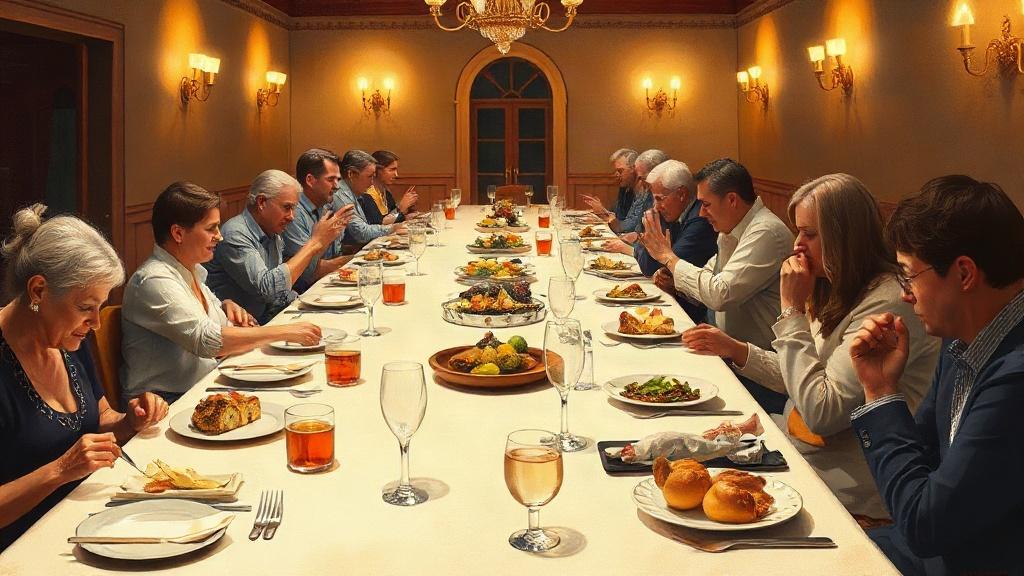
You're sitting at the table. Dishes are being passed around, laughter breaks out, and someone tells a story everyone already knows by heart. And you smile at the right moment, nod along, and you're there without really being there.
Something in you whispers: "I don't belong here."
If you're reading this, you probably know that feeling. That subtle gap between who you've become and who your family expects you to be. That strange sense of being surrounded by the people who know you best… and yet feeling invisible.
First message, before anything else: you're not broken, and you're not alone. This experience is far more common than you'd imagine, but nobody talks about it around the table.
In this article, we'll explore together how to survive family dinners when you feel out of place, and better yet, how to turn these moments into spaces where you can breathe, be present, and stay whole. Not with manipulation tactics or stock phrases, but with concrete, honest keys.
And hold on to this thought: "Look at how you've made it through this year. Every single day was an act of quiet courage." You can get through this family dinner too. And maybe even better than you think.
Understanding What's Happening When You Feel Like the Odd One Out at Family Gatherings
Before looking for how to survive family dinners when you feel out of place, you need to understand where this feeling comes from. Because naming it already takes away part of its power.
The Gap Between Who You Were and Who You Are
In a family, everyone is handed a role very early on. The serious one, the funny one, the rebel, the high achiever, the one who takes care of everybody. These roles harden, sometimes for decades.
Then you grow up. You change your values, your job, your city, your way of thinking. But at the table, everyone still talks to you as if you were 15. The scenery hasn't moved, while you have.
That's the gap that makes you feel like a stranger in your own home. If this sensation speaks to you, this article on why you feel lonely at family gatherings explores this paradox in depth.
Family Egregores: That Invisible Energy
At Humans.team, we often talk about egregores, the collective energies that build up when a group shares beliefs, habits, and expectations over time.
Your family is a perfect example. It has its unwritten rules:
- The topics you talk about (and the ones you avoid)
- The way people joke
- What's valued (success, stability, appearances…)
- What's tolerated and what isn't
When you sit down at the table, you step into that energy field. And if you've evolved, you feel the friction. It's not that something is wrong with you: it's your awareness picking up on a mismatch.
That friction isn't your enemy. It's a signal.
What This Feeling Is NOT
Let's clear up a few misunderstandings:
- It's not a lack of love. You can love your family and still feel out of place.
- It's not ingratitude. Feeling a gap doesn't mean you owe anyone your silence.
- It's not weakness. On the contrary, it takes real clarity to perceive these nuances.
Why This Matters in Your Life
You might think, "It's just a dinner, it'll pass." But these moments have more impact than they seem to.
What You Carry Before, During, and After
The stress of a family meal doesn't begin when you walk through the door. It starts days earlier: anticipation, mental rehearsals, emotional fatigue. And it often lingers afterward, with that small emptiness or dull tension that stays in your chest.
If you just "endure" these moments, they drain your energy. And that energy is your most precious resource for living your life.
What's at Stake: Not Losing Yourself in Order to Belong
Many people, without realizing it, choose to go on standby at the table. They check their personality at the door to avoid conflict. They play the expected role.
In the short term, it feels comfortable. In the long term, it deepens a sense of invisibility. You might want to reflect on what it really means to feel seen in your relationships, because that's often where the heart of the matter lies.
The Good News
Here's what we too often forget: you have more power than you think. You can't change your family, but you can change the way you show up in it. And that inner shift often changes the whole dynamic, subtly.
Happiness doesn't wait for your family to finally understand you. It's decided right now, even around a holiday table.
Practical Keys to Getting Through a Family Dinner When You Feel Out of Place
Let's take action. Here are five keys to knowing how to survive family dinners when you feel out of place, but above all, to finding real presence in them.
1. Ground Yourself Before You Arrive
The best time to prepare is before you walk through the door. Take five minutes in the car, in the hallway, or out on the street.
A simple little ritual:
- Plant both feet on the ground and take three deep breaths
- Remind yourself of an intention: "I'm here to be present, not to be perfect."
- Picture yourself calm, grounded, in your place
This intention changes everything. You no longer arrive on the defensive, you arrive with awareness.
2. Choose Your Role, Don't Just Fall Into It
At the table, you probably have an "automatic" role. Now you can decide whether or not to play it.
Ask yourself: "What do I want to embody tonight?"
Maybe the curious observer, the kind presence, the person who truly listens. Choosing your role, even quietly, gives you back a sense of freedom. To go further on this topic, you can discover 9 ways to find your place in your family when you've changed.
3. Turn Conversation into Connection
Family small talk can feel hollow: weather, work, the news. But behind these everyday topics lie doorways to something more real.
Try this:
- Ask an open-ended question rather than a closed one ("What stood out to you most this year?" instead of "How are you?")
- Really listen to the answer, without planning your reply
- Pick up on an emotional detail, not just the facts
You'll see: a single genuine question can warm up an entire conversation. This article on how to make small talk truly meaningful will give you more concrete ideas.
4. Give Yourself Conscious Breaks
Feeling out of place takes energy. You're allowed to recharge.
A few discreet ideas:
- Go help in the kitchen (an excellent refuge for catching your breath)
- Step outside for five minutes to "get some air" or make a phone call
- Go to the bathroom, close your eyes, and breathe slowly
- Spend time with the kids, often a source of simple, genuine connection
These breaks aren't running away. They're acts of care for yourself.
5. Set Boundaries with Gentleness and Clarity
Are there topics that hurt you? Comments that weigh on you? You don't have to absorb everything in silence.
A healthy boundary sounds like this:
- "I'd rather not get into that tonight, but I'm really glad to be here."
- "Let's talk about it another day, if that's okay."
- A smile, a calm change of subject, without aggression
Setting a boundary isn't rejecting the other person. It's respecting yourself. Our guide on how to set boundaries with family during the holidays goes deeper into this delicate art.
Your Plan for the Next Meal: Putting It into Practice
Theory is great. But how to survive family dinners when you feel out of place becomes real when you take action. Here's a simple three-step plan.
Before the Meal (5 to 10 minutes)
- Write down your intention in one sentence: "Tonight, I want to be ______." (present, gentle, curious, grounded…)
- Identify one person you feel more at ease with and plan to spend a moment with them.
- Prepare two open-ended questions you'd like to ask someone.
- Decide on your "fallback plan": what break will you take if the energy gets to be too much?
During the Meal
- Breathe before responding to a comment that throws you off. Three seconds is enough.
- Observe without judging. You're both in the scene and a witness to the scene.
- Look for a moment of real connection, however tiny: a glance, a smile, a confidence.
- Remember: you have nothing to prove, nothing to defend.
After the Meal
Don't skip this step. It's essential.
- Take a moment alone to release the tension (a walk, music, a shower).
- Note three things that went well, even tiny ones.
- Thank yourself: you got through something uncomfortable with courage.
A Mini Gratitude Exercise
Tonight, before you go to sleep, ask yourself: "What did I do today that I wouldn't have dared to do a year ago?"
You'll be surprised by the answer. Every small step counts, and these quiet acts of courage gradually build a lasting freedom.
And What If You Feel Disconnected from Everyone?
Sometimes the gap goes beyond family: it's a general feeling of disconnection. If that's you, this article on why you feel disconnected from everyone might shed some light and bring you some peace.
Conclusion: Your Place Exists, and You're Already Building It
Knowing how to survive family dinners when you feel out of place isn't about learning to blend into the background. It's about learning to stay yourself, gently, even when the environment reminds you of old roles.
You don't need your family to understand you perfectly in order to be at peace. You don't need to wait for "the right moment" or "the right version of yourself." Tonight, at that table, you can already choose to be present, kind to yourself, and free in how you react.
Every dinner is a chance to prove to yourself that you can move through discomfort without betraying yourself. And little by little, something shifts: the way you show up at the table, your energy, and sometimes even the way others look at you.
So, one last question, for you, right now: what's the smallest thing you could do at your next family dinner to feel a little more like yourself?
Take the time to answer it. Maybe the answer is already there, somewhere inside you.
If this article resonated with you, we invite you to explore more reflections at humans.team, a space for those who choose to live more consciously, more freely, and more humanly. No pressure, no miracle promises: just a shared path.
Happiness is now ◯